
How it works
Continuous airflow from outside air alone
Trapped humidity and swinging temperatures turn a sealed shipping container into a rain chamber. DRY-CON X® pairs a patented ACTIVE, non-powered exhaust with a passive intake vent, using the Venturi Effect and Bernoulli Principle so outside air keeps moving through the container, without electricity, fans, or holes in your roof.
How do you stop condensation in a shipping container?
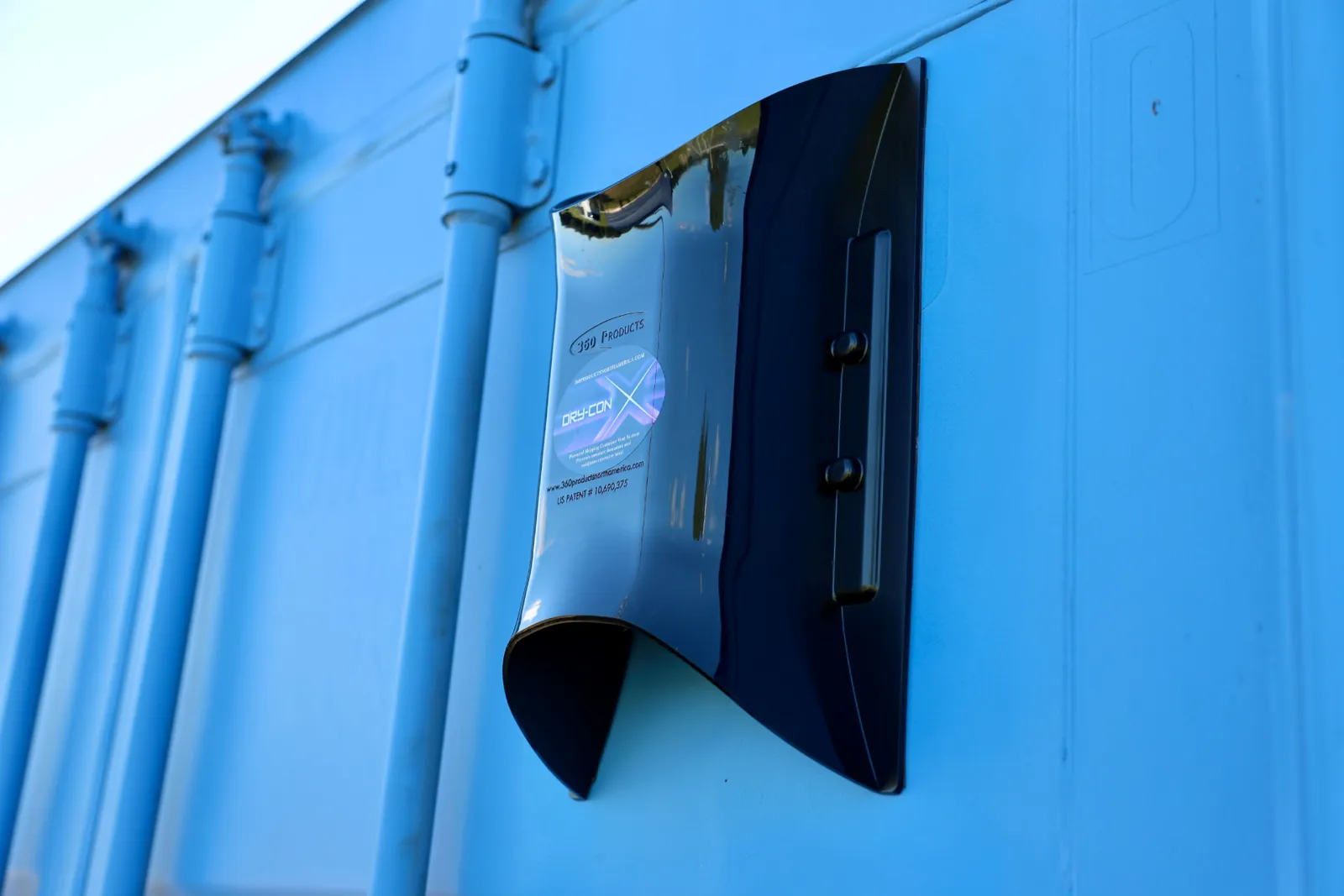
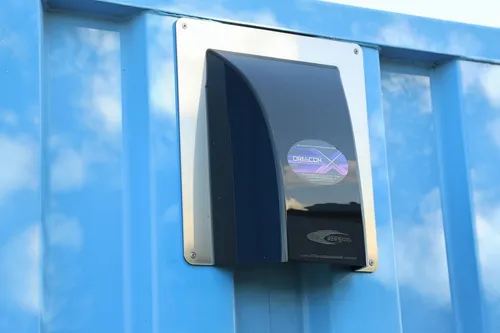
DRY-CON X® prevents “container rain” and excessive heat buildup in a shipping container, conex box, or storage container using only outside air movement to create the needed 24/7 airflow. The vents mount on the container doors or walls, so there are no holes in your roof and no power, wiring, or fans.
How many vents? 1 intake and 1 exhaust for a 20 foot container; 2 intake and 2 exhaust for a 40 foot or high cube container.
Why condensation happens
A Steel Box Holds Moisture With Nowhere to Send It
01
Daytime heating
The steel container and the air inside warm up, and the air picks up moisture from the floor, stored goods, and humid outside air.
02
Cooling
Overnight the steel shell cools faster than the humid air trapped inside.
03
Condensation
Moisture condenses on the ceiling and walls.
04
Container rain
Accumulated moisture drips back down onto stored contents.
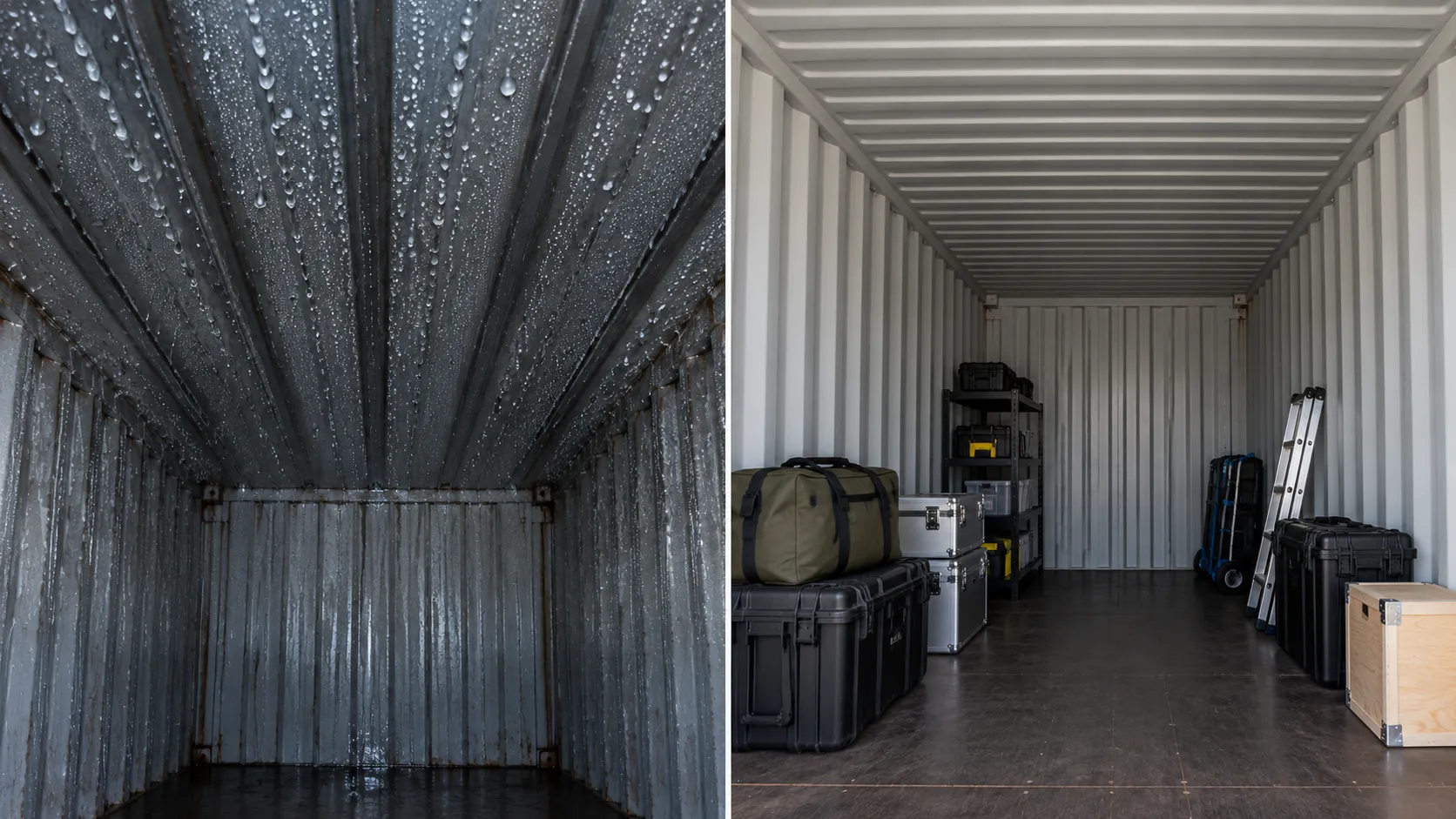 BeforeAfter DRY-CON X
The result is water on equipment, damp floors, musty odors, rust, and conditions that favor mold. Sealing the container tighter makes it worse. The air has to be exchanged.
Simply adding an opening and installing a “passive” louvred style vent will not guarantee effective airflow. The multi-patented design of the DRY-CON X system creates an “Active” environment where air currents are directed as a one-way flow through the container.
How DRY-CON X creates airflow
How DRY-CON X uses wind to prevent shipping container condensation
The active, non-powered exhaust uses moving air to create a continuous Venturi effect, drawing stale, moisture-laden air out while the passive intake lets replacement air in. Performance is actually increased when wind follows its normal chaotic nature.
Just a breeze is all it takes. DRY-CON X begins working with air movement as low as 0.5 mph.

- 01
The Exhaust Actively Draws Air
Moving air creates a Venturi effect at the active, non-powered exhaust, drawing stale interior air out.
- 02
Outside Air Enters
The passive intake allows replacement air into the container as air is drawn out.
- 03
Air Moves Through the Container
The intake and exhaust locations work together to establish airflow through the enclosed space.
Active, non-powered exhaust. Passive intake. One airflow system.
Two components, one system
The System Depends on Both Intake and Exhaust
DRY-CON X is not a single vent installed anywhere on the container. The exhaust creates the draw, and the intake supplies the replacement air. Without both, air has no defined path in and out.
Compared with turbine and louvered vents
How DRY-CON X compares to turbine and louvered vents
A vent gives air somewhere to go. Ventilation creates the airflow that moves it.
Minimum air movement to begin working
DRY-CON X®
0.5 mph
Turbine
~2 mph
Louvered
N/A
Actively draws interior air out
DRY-CON X®
Yes
Turbine
Yes
Louvered
No
Provides coordinated intake + exhaust airflow
DRY-CON X®
Yes
Turbine
No
Louvered
No
Works with just a slight breeze
DRY-CON X®
Yes
Turbine
No
Louvered
No
Requires spinning or moving parts
DRY-CON X®
No
Turbine
Yes
Louvered
No
Creates directional airflow
DRY-CON X®
Yes
Turbine
Limited
Louvered
No
Provides an opening for air
DRY-CON X®
Yes
Turbine
Yes
Louvered
Yes
Creates ventilation on its own
DRY-CON X®
Yes
Turbine
Partial
Louvered
No
Requires power
DRY-CON X®
No
Turbine
No
Louvered
No
Gusts and turbulence
DRY-CON X®
Responds instantly
Turbine
Must overcome mechanical inertia
Louvered
N/A
Mounting position
DRY-CON X®
Container corner, where wind speed almost doubles
Turbine
Roof top, where wind speed is lower
Louvered
N/A
Installation
DRY-CON X®
Walls and doors
Turbine
Hole cut in the roof
Louvered
Walls and doors
Values from 360 Products technical material comparing DRY-CON X with turbine and louvered vents. Louvered vents also mount on walls and doors, but they only provide an opening; they do not draw air through the container.
Don’t just take our word for it
Results From Container Owners
“I installed your 360 container vent system back in Sept 2019. I am reviewing this product a year and five months later. I used two intakes and two exhaust per 40 foot container as suggested. We had a terrible problem with container rain and mildew build up. After we installed this system we cleaned all the mildew off the ceiling of four different containers and have not had a problem since. These vents work!”
Texas Grain Storage: 7 Year Test
John H. from Texas documents his 7 year experience with 360 Venting and how it resulted in a complete elimination of grain loss.
Illinois Heat Mitigation & Moisture Control
John W. from Illinois documents his 16 month field test with detailed product performance figures.
Vent placement
Where should the intake and exhaust vents go?
The goal of the DRY-CON X® system is to use outside air currents with a combination of intake and exhaust vents to create a “flow through” situation inside the container that exhausts old, stale, moisture-laden air and replaces it with fresher, ambient outside air. This is the key to moisture prevention.
Correct intake and exhaust placement depends on:
- Container size, including 20', 40', and high-cube
- The direction the container doors face
- The direction the wind commonly comes from at your site
- Nearby buildings, trees, or containers that block air movement
Gusty or chaotic wind is not a concern; it actually enhances the performance of the DRY-CON X® system. Find My Kit works through those variables for your specific ZIP code and container and returns the exact kit and placement to use.
Get the Right Kit for Your Container
Answer a few questions about your container, its orientation, and your location. Find My Kit returns a recommended configuration built for your conditions.
Ready to Determine the Right Configuration?
Find My Kit recommends a configuration for your container and location. If you already know what you need, go straight to the shop.
DRY-CON X ships worldwide. Contact us for orders outside the U.S., Canada, and Australia. In Canada, order through 360 Vent Systems Canada and in Australia through our Australian distribution point. Questions about volume or dealer pricing? Contact our team.